Phylogenetic Biology
2026-09-04
Preface
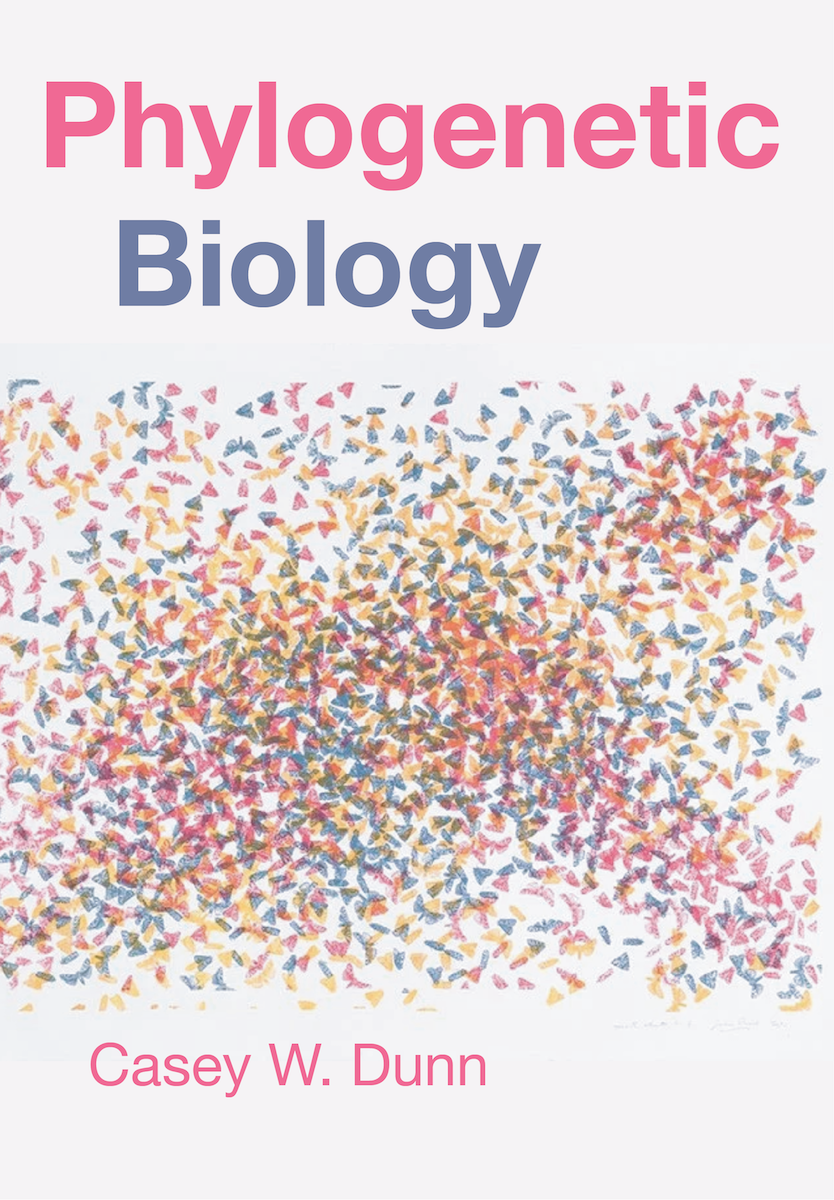
Figure 0.1: Cover art: Moth Cluster IV (2016), pen, ink and silkscreen on paper, 65 × 140 inches. © James Prosek; image courtesy of the artist.
The paperback is available directly from the printer in the United States, Canada, and Great Britain. After selecting your currency and quantity, enter your address and click Update Order to proceed with the rest of the purchase.
The book is also available from your favorite bookseller in these and other regions.
Approach
Models are at the core of modern phylogenetic biology. Models are usually taught in the context of phylogenetic inference, where they are used to look backward in time. This seems to me a bit like teaching students to master driving in reverse before you show them how to drive forward down a road. Phylogenetic models are generative—they explain how data are created under specific evolutionary processes. They are therefore more intuitive to understand in the context of generating data, proceeding in time from ancestral states forward to future states. I therefore focus first on building an intuitive understanding of models in the context of simulation, and only after that apply models to inference and other tasks that look back in time.
This book is not a comprehensive treatment of phylogenetic biology; it is focused on teaching some of the key concepts and methods. This will provide a foundation for the many other rich areas of the field, from its interfaces with population genetics to comparative genomics to comparative methods at a macroevolutionary scale. It is in no way an overview of all of phylogenetic biology, which has grown into a very large field. Omissions of topics do not imply that they are unimportant.
Using this book
This book is intended both for the self-directed learner and for use in a course.
I wrote it as a text for my course, Phylogenetic Biology (Yale EEB354). We read one chapter a week. We review and discuss the reading on Tuesdays, and then on Thursdays do hands-on work, read papers from the literature, or share student projects.
Distribution
There are several ways you can get this book:
You can read an HTML version for free at https://dunnlab.org/phylogenetic_biology/
You can purchase a paperback from your favorite book retailer. Search for ISBN 979-8-9934524-0-1.
You can purchase a hardcover from your favorite book retailer. Search for ISBN 979-8-9934524-1-8.
The book is rendered from source code available at https://github.com/caseywdunn/phylogenetic_biology, with
bookdown(Xie 2016). If you are curious about how any of the figures or analyses were done you can examine the source code there and rerun it yourself.Snapshots of source code for each release are also available on Zenodo via the book’s DOI at https://doi.org/10.5281/zenodo.17267993.
Please submit any errors you find, typos, or suggestions that you have for improving the manuscript to the issue tracker at https://github.com/caseywdunn/phylogenetic_biology/issues.
You are currently reading the First Edition (Version 1.1.1) of the book. Please cite it as follows:
Dunn CW. Phylogenetic Biology. First Edition. New Haven, CT: Casey W. Dunn; 2026. ISBN 979-8-9934524-0-1. https://doi.org/10.5281/zenodo.17267993
This book follows semantic versioning (major.minor.patch). The major version is the edition: a new edition marks a substantial revision and carries a new ISBN, minor versions add or revise content while keeping earlier citations valid, and patch versions make editorial corrections. The online edition at https://dunnlab.org/phylogenetic_biology/ is updated continuously as new versions are released, while each released version is permanently archived on Zenodo through the DOI above.
Other resources
The following sites have a wide variety of material that is relevant to the theory and practice of phylogenetic biology.
An extensive list of tools, tutorials, and examples of phylogenetic tools in the programming language R maintained by Brian O’Meara. https://cran.r-project.org/web/views/Phylogenetics.html.
Liam Revell has an excellent blog on phylogenetic methods. https://blog.phytools.org/.
The Workshop on Molecular Evolution at Woods Hole. This is an intensive summer course on phylogenetics, with an emphasis on building phylogenetic trees. https://molevolworkshop.github.io.
The Applied Phylogenetics Workshop in Bodega Bay. This is another summer course on phylogenetics, but with a bit more emphasis on using phylogenies to test evolutionary questions. http://treethinkers.org/tutorials/.
The following are some of the many great books for learning more about phylogenetic methods:
Baum, D. and Smith, S. (2012). Tree Thinking: An Introduction to Phylogenetic Biology. Roberts Publishers.
Felsenstein, J. (2004). Inferring Phylogenies. Sinauer Associates.
Garamszegi, L. Z. (2014). Modern Phylogenetic Comparative Methods and Their Application in Evolutionary Biology. Springer.
Paradis, E. (2011). Analysis of Phylogenetics and Evolution with R. Springer.
Revell, L. J. and Harmon, L. J. (2022). Phylogenetic Comparative Methods in R. Princeton.
Swofford, D. L., Olsen, G. J., Waddell, P. J., and Hillis, D. M. (1996). Phylogenetic inference. In: Molecular Systematics, Second Edition. Eds: D. M. Hillis, C. Moritz, and B. K. Mable. Sinauer Associates.
The following books provide general computational background for the topics covered here:
Wickham, H. and Grolemund, G. (2017). R for Data Science. https://r4ds.had.co.nz.
Haddock, S. H. D. and Dunn, C. W. (2010). Practical Computing for Biologists. http://practicalcomputing.org.
Acknowledgments
Thanks in particular to the students of Yale EEB354 in 2020, 2022, and 2024. This book started as a collection of lecture notes for this course. The students provided invaluable motivation and feedback. Thanks in particular to Lauren Mellenthin (graduate teaching fellow for the course in 2020), Namrata Ahuja (teaching fellow in 2022), and Dalila Destanovic (teaching fellow in 2024). Other lab members provided very helpful feedback when I posted new chapters. Steve Haddock and Felipe Zapata also provided close reads of most chapters, often within hours of completing first drafts. Nate Grubaugh invited me to share a couple chapters in his course each year. Thanks to Richard Hammack, author of Book of Proof, for his helpful advice on self-publishing to facilitate student access. I am also very grateful to the students and faculty of the Workshop on Molecular Evolution at Woods Hole. Finally, I thank James Prosek for generously allowing me to use his work Moth Cluster IV for the cover.
Description of AI use
I started this book in 2020, and the bulk of the writing was finished by 2024, before capable large language models were available. The following chapters were drafted in full during that period, without any use of AI: Introduction, Phylogenies, Simulation, Inferring phylogenies from data, Molecular inference in practice, Evaluation, and Phylogenies and time.
Large language models did assist with drafting the remaining chapters, to varying degrees. Any text produced with the assistance of AI was carefully reviewed and, in most cases, heavily revised by hand. In the final stages of production I also used AI to copy edit the full book, to address some technical issues with code, and to refine figures, for example their size and spacing. Claude Opus 4 variants were the primary models used.
To describe this more precisely, the GAIDeT taxonomy (Suchikova et al. 2026) provides a standard vocabulary for declaring which tasks were delegated to generative AI. Under that taxonomy, and under full human supervision, I delegated text generation (for some chapters), proofreading and editing, and reformatting from the Writing and Editing category; code generation and code optimization from Software Development and Automation; and visualization from Data Management. Everything else—the conceptualization, the choice of topics and framing, the methodology, the analyses, and the final wording—is my own. Responsibility for the book lies entirely with me.
0.1 License

This work is licensed under the Creative Commons Attribution-NonCommercial-NoDerivatives 4.0 International License. It is available to read online for free at https://dunnlab.org/phylogenetic_biology/, ensuring access to all students worldwide. Commercial use by others (e.g., the sale of printed copies by anyone other than the author) is not allowed.